There are many components on a motorcycle. Each component plays a vital role in ensuring both comfort and safety while riding. One crucial component that requires careful adjustment is the motorcycle suspension. A well-adjusted suspension provides balance, a smooth riding experience, and improved handling on the road. Daily commuting, long trips, or racing all demand well-maintained suspension systems.
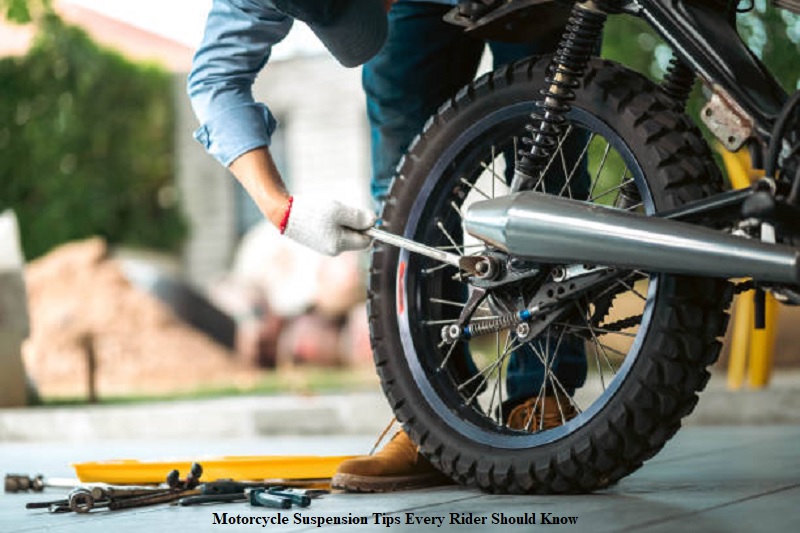
Understanding the Basics of Motorcycle Suspension
A bike’s suspension includes front forks and rear parts that help absorb impact from the road. These parts absorb road imperfections, support consistent tire contact, and influence handling during braking, turning, and acceleration. Familiarity with basic suspension terms helps with effective tuning:
- Sag shows how far the suspension sinks under the rider’s body load.
- Preload alters the spring’s starting tension.
- Damping regulates suspension movement speed. Divided into compression (downward) and rebound (upward).
1. Set the Correct Sag
Setting the correct sag is crucial as it affects ride height, balance, and cornering performance. Incorrect sag can lead to discomfort or poor handling. Ideally, front sag should be between 20–30 mm, while rear sag should fall within the 5–10 mm range.
To measure sag, first lift the wheels off the ground and take a reference measurement. Then, repeat the measurement while seated on the bike with your riding gear or luggage. The difference between these two measurements is your sag value. If the sag is outside the recommended range, adjust the preload accordingly until it falls within the optimal range.
2. Adjust Based on Load and Riding Type
Suspension should be tailored to suit the rider’s style and the weight carried during travel. When riding with passengers or extra baggage, increasing preload is often necessary. After adjustments, sag should always be checked again.
For those who prefer track riding, modifying the suspension to lower the front or slightly raise the rear can improve steering precision. On the other hand, touring riders often benefit from a softer setup that offers better comfort over long distances and varied road conditions.
3. Fine-Tune the Damping
Compression damping manages the suspension’s rate of compression. Rebound damping affects how fast it extends. Improper rebound settings may cause handling problems. Excessively soft rebound can reduce front-end stability and traction after hitting bumps.
If it’s too firm, the motorbike suspension will feel harsh and fail to recover properly, which affects traction. To avoid this, make small adjustments, test the ride after each change, and keep written notes to track what works best.
4. Perform Routine Suspension Maintenance
Proper care ensures a smooth, dependable ride. Regularly lubricating the seals with suspension-specific products helps maintain responsiveness and prevents wear. Air suspension systems require proper pressure, which can be adjusted using a dedicated shock pump.
Suspension components also require timely servicing. The lower fork sections should be maintained every 30 to 50 hours of use. While a full rebuild of the damper and shock system should be scheduled every 100 to 200 hours. Frequent inspections can also reveal leaks or wear before they turn into serious problems.
5. Aim for Balance
There is no universal setting that works for everyone or every situation. The ideal setup depends on body weight, riding habits, and the terrain. Stock suspension parts usually offer limited adjustability, and significant changes may require geometry alterations or upgraded components.
Instead of chasing tiny tweaks with the hope of dramatic improvement. It’s more practical to understand the limits of what the stock system can provide and use it to its full potential.
6. Keep Track and Ride-Test
Every change should be followed by a short ride to observe its effect. Keeping a simple record of what has been adjusted and how it feels on the road makes future tuning much easier. The motorcycle’s manual remains the most reliable source for correct procedures and suggested settings, so it should always be used as a reference when making any changes.
Based on @FortNine’s YouTube channel, the most common cause of tank slappers is a wrong adjustment of the suspension. Tank slappers, or oscillations that can lead to loss of control, often occur when the front end of a motorcycle lifts unexpectedly. This can happen during maneuvers like wheelies or sudden acceleration, causing the bike to overcorrect and create a chain reaction of instability. It can be fixed by modifying the preload settings, upgrading to progressive springs, and making proper damping adjustments.
A well-tuned and well-maintained motorcycle suspension system enhances both safety and comfort, regardless of experience level. By learning the basics, making thoughtful adjustments, and staying consistent with care, any rider can enjoy a smoother, more stable, and more enjoyable journey. /Fitri